


Pizza Between the Blasts

Tomorrow, When the War Began was the first book I ever read in English after moving to Australia in 2005, at the age of eighteen—a haunting story that has been returning to my mind a lot these days. It tells of a life suddenly overturned, of invasion and aggression the characters never saw coming and were never prepared for.
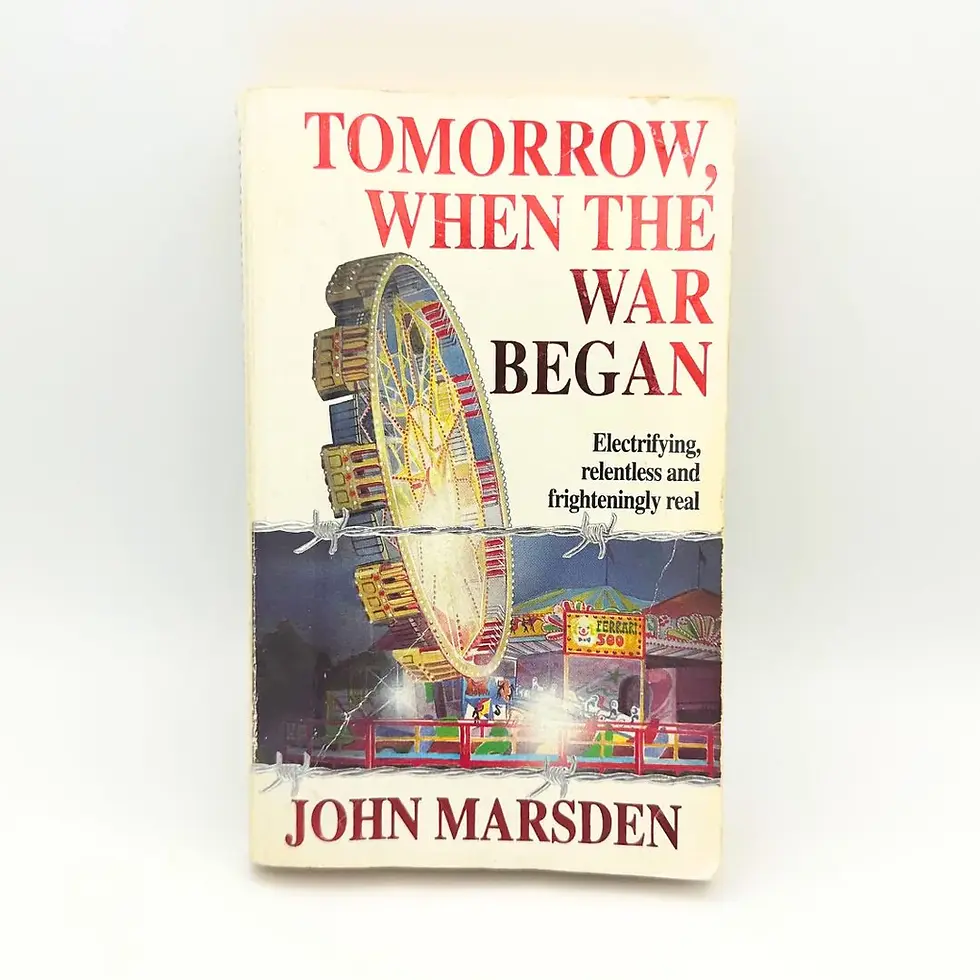
That story fell on fertile soil in my mind even back then.
Because being Polish means having shrapnel in your genes.
Do you believe in ancestral or intergenerational trauma? Even if you don't, imagine growing up in a culture still processing two World Wars, like indigestion that won't clear — through movies, TV series, books, and the stories of your grandparents.
My beloved grandmother's entire childhood consisted of WWII and its aftermath. Her mother, my great-grandmother—whom I was blessed to know and spend time with—lived through both World Wars.
The war narrative envelops you. You absorb it without even realizing it. The trigger lives deep within you, and the fear becomes visceral, even though those experiences were never part of your own life.
Did I ever think I would find myself living through a war environment in the Arabian Gulf?
Of course not.
But from one day to the next, reality can change dramatically—just like in Tomorrow, When the War Began.
I receive hundreds of DMs and messages daily about the current situation—from concerned family and friends, from people who once drove me somewhere on holiday and saved my number, from people I haven't spoken to in years, and even from people who don't know me personally. My expat friends are experiencing the same thing.
Have we suddenly become on-the-ground journalists in a war zone?
I have been talking more to my Grandma during this time. My family in Australia, where she now lives, tells me to report regularly because she is worried sick.
"Do you hear the sounds of the War? The explosions and the sirens?" she asks in a different tone.
"Because it stays with you," she adds—a warning more than eighty years after she last heard them.
A chill runs down my spine because I hear them now.
And I will always know what it is like to wake up to a burning horizon. I feel united with all those who have known the uncertainty of War. Even if pizza still gets delivered in between the blasts, it only makes the situation more distorted. Even if only one child died, it was one too many.
Stop telling me to freak out or not to freak out. Stop telling me it's worse somewhere else. Stop telling me to leave. Stop telling me you know what it's like unless you are here. Stop telling me I'm dramatic. Stop telling me I'm grotesquely calm.
Black humour is my oxygen tank.
And never tell me I am a white colonialist.
I switched off the alerts, turned off the phone, and pushed my earplugs in. Being terrorized at night and losing sleep was not going to become my reality if I could help it—no crowded basements or bunkers for me either.
You learn a lot about yourself and about the people in your circle after going through something like this.
I walked off miles and miles worth of cortisol, even with drones flying overhead. I refused to be robbed of everything. I am not a prisoner in my own home, I told myself.
I ate mountains of sugar because that's what calms a dysregulated nervous system. “Regulate your nervous system” strategies flashing me in my feed only made me laugh. I went numb and then cried in hiding, not really knowing why.
I desperately wanted a puppy.
I am more defiant than I realized.
Seeking agency became a priority—looking for what I could physically do to feel more in control.
Seeing friends became a lifeline. Those who stayed because we understood the intricate structure that holds us in this place.
"I would feel like I was forced out if I left now. It would feel like defeat, desertion," a friend told me.
Seeing my neighbors walking their dogs became my antidepressant—people who refused to abandon their pets. Suddenly, we all talked more. I was so happy to see those familiar faces.
We became friendlier, chattier, offering help, unity, and camaraderie. And one of the most beautiful realizations of my life emerged from it.
I had always thought that people turn nasty during wars.
"No," my Grandma said. "People will never amaze you more than during these tough times. I wouldn't be here if it weren't for the kindness of strangers and local families who shared their last provisions with my widowed mother, left with five small children."
Paradoxically, during War, you regain your hope in humanity.
I shook my head.
"There are so many wonderful people out there," my Grandma said.
The stronger the danger, the stronger the bond.
Did I really have to live through this to regain my belief in humanity?
"I'm so proud of us," my friend said one day, on a better day. "Even for sticking it out this far."
She has her good days and bad days, as do I. Luckily, they rarely overlap. When one of us limps, the other can support her.
There are no right decisions in times like this, I've realized—only difficult ones.
Svetlana Alexievich. Zbigniew Herbert. Tadeusz Różewicz.
I read you, studied you, analyzed you.
I never imagined I would feel you this deeply.
Agnieszka Wolczynska
Carousel Ride
Broken pieces of the night.
Suddenly, the sky erupts.
Why am I on fire through the retina in my eyes?
Open bowels draped on a nausea carousel.
You really get used to it…
How am I so numb and yet so deeply in love?
With this place, with these faces.
I don't want to run away, not like this.
I want to move with purpose.
Is my fuel fear or love?
You don't get a say when Death comes for you.
Bad things always come in threes.
But do they come in thousands?
How much suffering have we ignored?
Blood dries up like rain.


Comments